
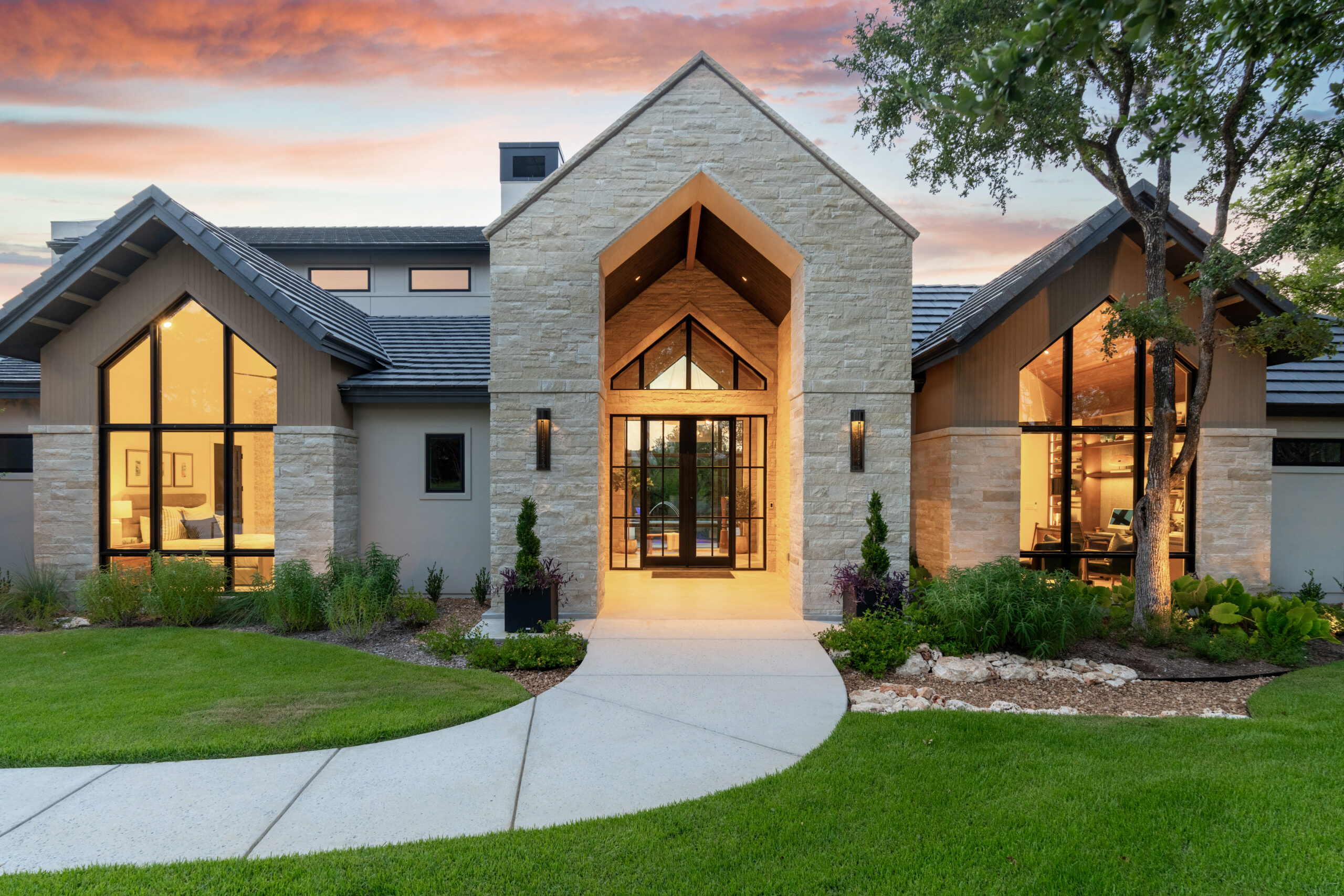
Building a custom home in Boerne is exciting because the process starts with more than a floor plan. The homesite, the community, the way you want to live, the builder you choose, and the decisions you make before construction can all influence the finished home. In the Texas Hill Country, those early conversations matter because the land itself often plays an important role in design.
The goal is not to have every detail decided on day one. It is to understand the right questions early enough that your property, design priorities, budget, and building team can move in the same direction. The guide below walks through the major decisions worth considering before a custom home project in Boerne moves too far into design or construction.
Quick Answer (TL;DR)
Before building a custom home in Boerne, evaluate the homesite first, confirm which property or community requirements apply, choose a builder who fits the way you want to work, define your lifestyle priorities before selecting finishes, align the budget with the site and scope, and allow room in the schedule for design decisions and approvals. The strongest projects usually begin with early coordination rather than isolated decisions.
In This Section
- Start With the Homesite, Not the Floor Plan
- Know Which Rules Apply to the Property
- Choose Builder Fit Before Design Decisions Become Expensive
- Define How You Want to Live Before Choosing Finishes
- Understand Community Expectations Before Locking the Design
- Align Budget With Site, Scope, Design, and Selections
- Build a Realistic Timeline Around Decisions and Approvals
- What to Look for in a Boerne Custom Home Building Partner
- Frequently Asked Questions
Start With the Homesite, Not the Floor Plan
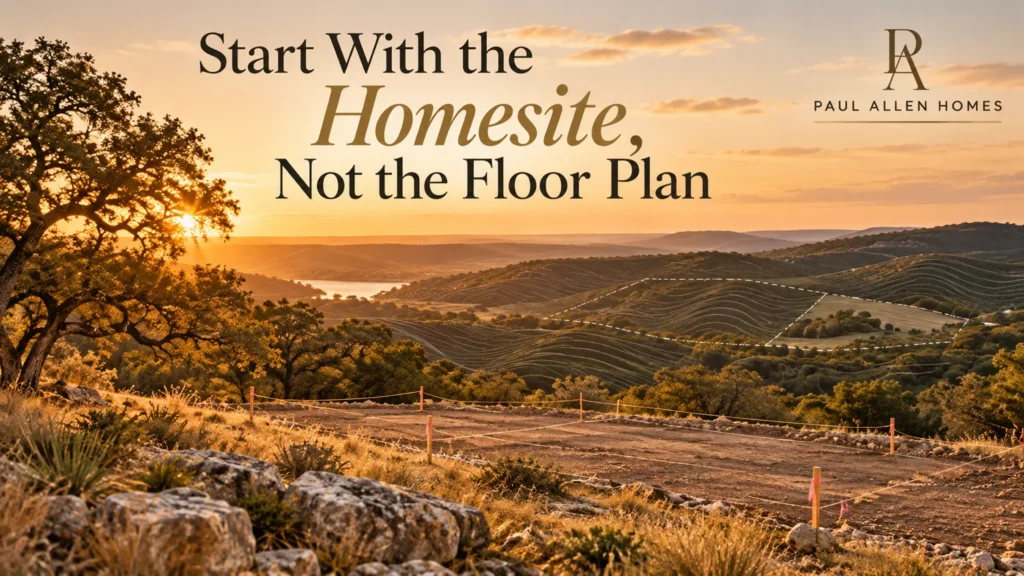
A custom home can be tailored to the way you live, but the property still sets important boundaries and opportunities. In Boerne and the surrounding Hill Country, a homesite may include elevation changes, mature trees, rock, long-range views, privacy considerations, and different access or utility conditions. Those factors can influence where the home sits, how it approaches the street, what you see from major rooms, and how indoor and outdoor spaces connect.
That is why it can be useful to look at the land before becoming attached to a specific plan. A design that works beautifully on one property may need meaningful changes on another. Early site conversations can help the team think about orientation, views, shade, arrival, drainage considerations, usable outdoor areas, and how much of the natural character of the property should become part of the design.
If you are still comparing properties, focus on fit rather than size alone. Ask whether the homesite supports the home you want to create and what constraints could affect design or site preparation.
Know Which Rules Apply to the Property
“Boerne” can describe a broad area, and the requirements for a custom home can differ depending on the specific property, jurisdiction, road access, utility setup, and community. A homesite inside a private luxury community may also have architectural-review standards that are separate from city or county requirements.
Before design is too far advanced, confirm which approvals, access requirements, development steps, utility considerations, and community guidelines apply to that exact homesite. For properties in unincorporated Kendall County, for example, county development and rural-addressing requirements may be part of the process. Other properties may follow a different path.
The practical takeaway is simple: do not design around assumptions. Verify the current requirements for the property you are actually considering, then let those requirements inform the design schedule and decision sequence. Your builder, design team, and the appropriate local or community authorities can help identify what needs to be addressed.
Choose Builder Fit Before Design Decisions Become Expensive
A luxury custom home is a long, collaborative project. Builder fit is therefore about more than whether you like a portfolio. You are choosing the team that will help coordinate design questions, selections, site conditions, trade partners, construction details, communication, and the inevitable decisions that arise along the way.
Before committing, ask how the builder communicates, who will be involved in the project, how early the construction team participates in planning, and how design decisions are translated into the field. Look at finished work closely. Ask for homeowner references or testimonials. Pay attention to whether the builder explains trade-offs clearly instead of simply agreeing with every request.
For homeowners comparing options in the area, the existing Boerne custom home builder page provides a closer look at Paul Allen Homes’ approach to custom building in Boerne and the Texas Hill Country.
Paul Allen Homes has been building in the region since 1984. That longevity is useful not because experience eliminates every challenge, but because custom building benefits from teams that understand how local land, communities, design expectations, and client communication intersect.
Define How You Want to Live Before Choosing Finishes
Beautiful finishes matter, but they should support the way the home functions. Before spending too much time on stone, cabinetry, fixtures, or decorative details, define the daily experience you want the home to create.
Think about entertaining, privacy, work or study, storage, guests, and indoor-outdoor living. Those priorities influence room relationships and circulation. A family that hosts large gatherings may plan differently from a homeowner who values quiet views and greater separation between public and private spaces.
These priorities also help the design team use the homesite more intelligently, turning views, trees, courtyards, or outdoor rooms into planning inputs rather than afterthoughts.
For visual inspiration, explore the luxury home gallery and look at how different architectural styles, materials, room relationships, and indoor-outdoor transitions are resolved across completed projects.
Understand Community Expectations Before Locking the Design
If you are building in a luxury community, the homesite may come with architectural guidelines or a formal design-review process. Those requirements can influence setbacks, exterior materials, massing, landscape expectations, or other parts of the design. The exact rules vary, so they should be verified directly for the property and community.
It is better to understand those expectations early than to redesign major elements after plans are well developed. Your architect and builder can coordinate around the applicable review process while still protecting the character and priorities that make the home personal to you.
You can explore Paul Allen Homes’ luxury communities to see the settings where the team builds and to understand how location and community character can shape a project.
For a Boerne-specific example, learn more about custom homes in Cordillera Ranch. Community-specific requirements should always be confirmed at the time you are planning your project.
Align Budget With Site, Scope, Design, and Selections
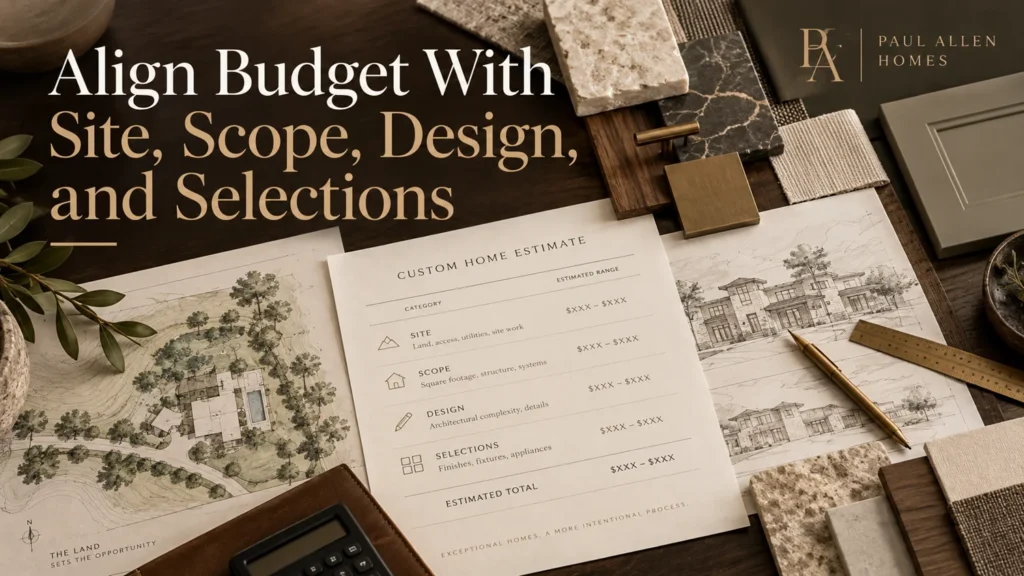
A custom-home budget is not determined by square footage alone. The property, architecture, structural complexity, material choices, building systems, outdoor spaces, specialty rooms, site work, and level of customization can all affect the scope of the project.
One of the most useful early conversations is not “What is the price per square foot?” but “Which parts of this home matter most to us, and what does that mean for the total scope?” That helps the team distinguish must-haves from features that can be simplified, deferred, or reconsidered as design develops.
Clear priorities also make selections easier. When homeowners know which experiences matter most—such as indoor-outdoor living, a highly detailed kitchen, privacy, or a specific architectural character—the design and budget conversations can stay focused rather than treating every choice as equally important.
Because site conditions and selections vary from project to project, early budget discussions should remain flexible enough to respond to what is learned during planning. The objective is alignment, not false precision before the scope is understood.
Build a Realistic Timeline Around Decisions and Approvals
Custom-home schedules are shaped by more than construction. Design development, homeowner decisions, architectural or community review, permitting, site conditions, engineering, material selections, and project complexity can all affect the sequence.
A useful timeline should therefore include decision-making as well as building. Delayed selections or major design changes can create downstream effects even when construction itself is progressing well. Conversely, early coordination can give the team more time to resolve questions before they reach the field.
No single duration fits every Boerne custom home. Instead of relying on a universal promise, ask your builder what milestones are expected, which decisions need to be made before each phase, what approvals may apply to your homesite, and how schedule changes are communicated.
What to Look for in a Boerne Custom Home Building Partner
By the time you are ready to choose a builder, you should be evaluating more than style. Look for evidence of craftsmanship, a communication process that fits you, experience with the type of property or community you are considering, and a team that can explain the relationship between design decisions and construction realities.
Strong builders should also be comfortable discussing what they do not know yet. Early planning often involves open questions about the site, approvals, design details, selections, and scope. A useful partner helps define those questions, coordinates the right people, and keeps the project moving toward informed decisions rather than premature certainty.
Paul Allen Homes has served Boerne, San Antonio, and the Texas Hill Country since 1984, with a long-standing emphasis on craftsmanship, personal attention, and homeowner relationships. The right fit still depends on your property, priorities, design direction, and preferred way of working—but those are exactly the conversations worth having before the plans are finalized.
Start With the Right Questions
Building a custom home in Boerne is easier to navigate when the early decisions are connected. Start with the land. Confirm the requirements that apply. Choose the right team before design becomes expensive. Define how you want to live. Align scope and budget. Build a schedule around real decisions rather than assumptions.
You do not need every answer before the first conversation. You need a clear understanding of what should be investigated next and a team that can help turn those questions into an organized plan.
When you are ready to discuss your homesite, priorities, or next steps, schedule a private consultation with Paul Allen Homes.


