

Choosing where to build a custom home can shape nearly every decision that follows. Some homeowners already own private land or are looking for acreage with more separation. Others are drawn to an established luxury community with a defined neighborhood character, shared amenities, or an architectural-review process.
Neither path is automatically better. Both can support a highly personalized home. The better question is which setting fits your priorities, lifestyle, and comfort with site-specific unknowns and community structure.
Quick Answer (TL;DR)
Private land may offer more acreage, privacy, and property-specific flexibility, but it can require more investigation of access, utilities, terrain, restrictions, and site work. A luxury-community homesite may offer a more defined neighborhood setting, design governance, amenities, and some established infrastructure. Neither path is universally better; compare the actual property, rules, lifestyle, and site conditions.
In This Section
- What the two options really mean
- Compare the homesite before you compare the house
- Design freedom: more control vs. more structure
- Infrastructure and site preparation
- Privacy, space, and neighborhood character
- Amenities and everyday lifestyle
- Architectural review, HOA, and ongoing rules
- Budget: compare the whole homesite
- Which option fits you?
- Talk to a builder before you commit to the homesite
- Frequently asked questions
First, Define What “Build on Your Lot” and “Luxury Community” Mean
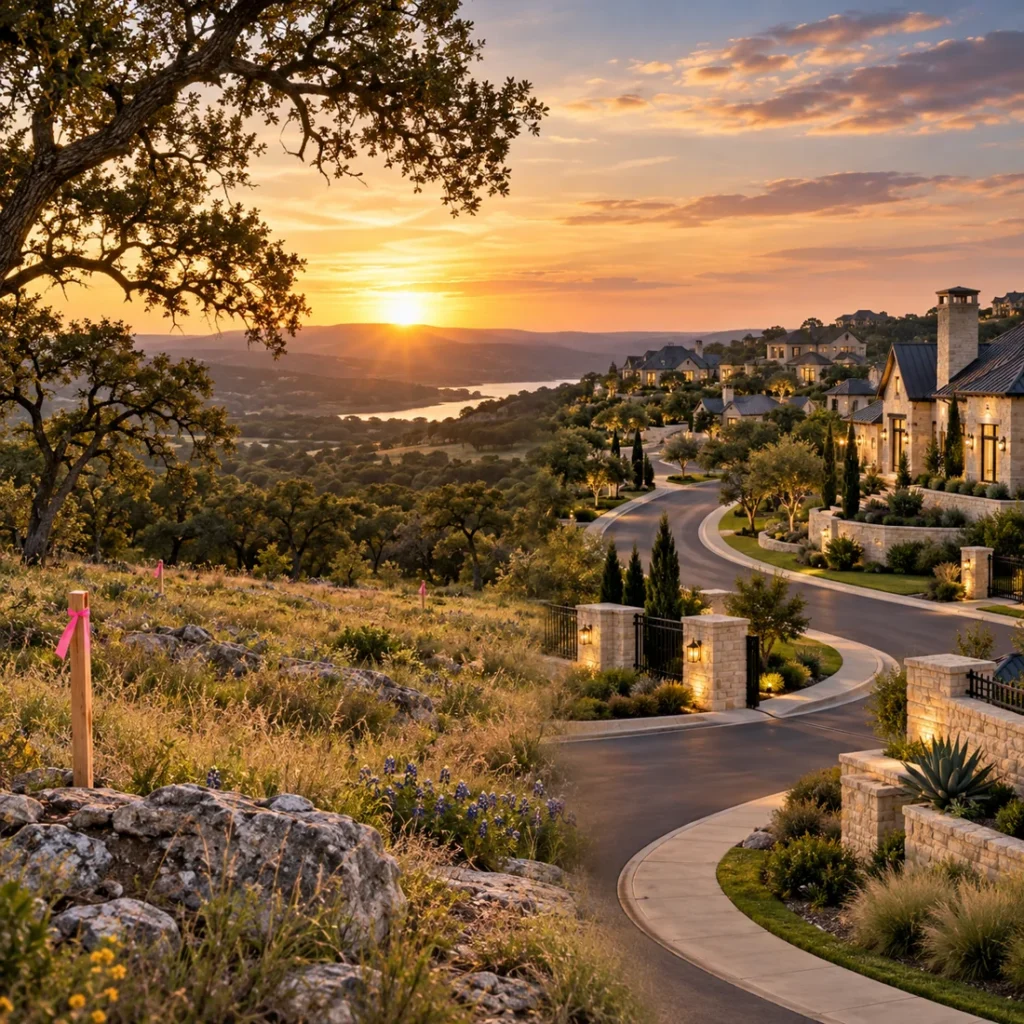
“Build on your lot” generally means building on privately controlled property outside a specific luxury-community framework. It may be land you already own, acreage you are considering, or a parcel chosen for its views, privacy, location, or family connection.
A luxury-community homesite is still your property, but it sits within a planned neighborhood that may add design guidelines, architectural review, amenities, association rules, or neighborhood standards. The specific community matters more than the label.
If you are still exploring that second path, explore Paul Allen Homes communities to see the different settings where the team builds.
Compare the Homesite Before You Compare the House
Before comparing floor plans, compare the land itself. Two homesites can support very different projects even when they are similar in size or price. Topography, usable building area, access, orientation, mature trees, views, drainage, utilities, easements, driveway length, and surrounding development can all influence what is practical.
On private land, more of those questions may need to be investigated from the ground up. Greater privacy can also come with longer utility runs, access challenges, or added site work. A luxury-community lot may have more established planning or infrastructure, but it still requires property-specific evaluation.
If you are comparing current opportunities, view available homesites for the latest property options rather than relying on inventory details in an evergreen article.
Design Freedom: More Control vs. More Structure
Private land can offer more flexibility when acreage, orientation, or a less standardized setting matters. But private property does not mean unlimited design freedom. Jurisdictional requirements, deed restrictions, easements, access, utilities, terrain, and other conditions can still influence the home.
Luxury communities may add architectural review, setbacks, landscape expectations, material guidelines, or other requirements. For some homeowners, that structure supports the consistent neighborhood character they value.
The best question is not, “Where can I do anything I want?” It is, “Which setting gives my design priorities the right balance of flexibility, context, and predictability?”
For inspiration across different custom-home settings, explore the luxury home gallery.
Infrastructure and Site Preparation
Infrastructure matters, but it should not be reduced to an assumption that one path is automatically easier.
A private lot may require more investigation into road access, power, water, wastewater, drainage, grading, retaining needs, or other site-development questions. Depending on the property, some systems may already be nearby while others require additional coordination.
A luxury-community homesite may have roads and certain utilities planned or established as part of the larger development, but that does not mean every homesite is construction-ready. Individual lots can still involve grading, drainage, utility connections, access planning, or other property-specific work.
Ask for the facts about the actual homesite. The broader category—private land or luxury community—does not replace site evaluation.
Privacy, Space, and Neighborhood Character
For some homeowners, private land begins with space. Acreage can create separation, views, a longer arrival sequence, or a stronger connection to the setting. More land can also mean more responsibility for access, infrastructure, landscape management, and site planning.
A luxury community may provide less separation than a large private parcel, but it can offer a more defined neighborhood experience. Streetscape, neighboring architecture, security, common spaces, and community planning may matter as much as acreage.
Neither lifestyle is more “luxurious” by definition. Luxury can mean privacy and land to one family, or convenience, community, and curated surroundings to another.
Amenities and Everyday Lifestyle
Amenities can become a meaningful part of the decision when they align with the way you actually live. Depending on the community, homeowners may have access to golf, club facilities, trails, river access, fitness spaces, social programming, security features, or other shared resources.
Amenities vary by community and should be verified before purchase. A private homesite may not provide a built-in amenity package, but it can support more land, separation, property-specific recreation, or the independence of a place chosen for its own character.
Instead of counting amenities, ask which ones you would realistically use and whether the surrounding setting supports the daily life you want.
Architectural Review, HOA, and Ongoing Rules
Private land and luxury communities can both come with rules. The difference is usually where those rules come from and how they affect the project.
Private property may still be affected by jurisdictional requirements, deed restrictions, easements, access limitations, utility conditions, or other recorded constraints. A luxury community may add an owners association, architectural-review committee, design standards, landscaping requirements, or additional approvals.
Those requirements should be understood before the design is finalized. Early coordination can help the architect, builder, and homeowner account for the right constraints before major decisions become expensive to change.
For one Boerne-area community example, learn more about custom homes in Cordillera Ranch. Always confirm current community-specific requirements directly before relying on them for a project.
Budget: Compare the Whole Homesite, Not Just the Purchase Price
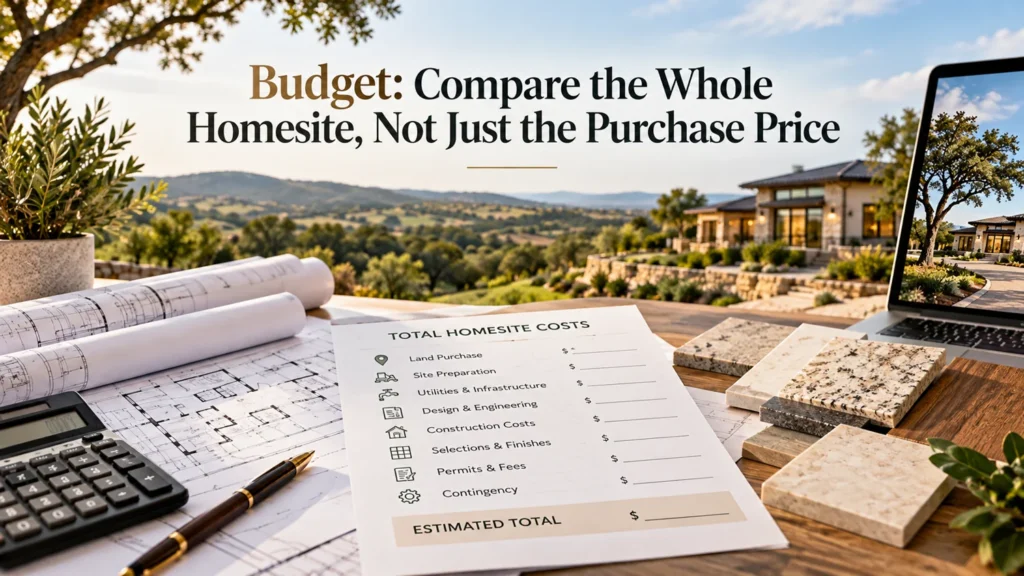
The purchase price of the land is only one part of the property decision. A useful comparison looks at the entire homesite and the conditions that come with it.
Private land may require budgeting for access, utilities, grading, drainage, site clearing, wastewater, wells, or other infrastructure. A luxury community may add association fees, architectural requirements, landscape standards, or other community-specific costs.
That does not make one option universally less expensive. A complicated community lot may need substantial site work, while a private parcel may have fewer unknowns than expected. Compare property to property, not category to category.
The home itself matters too. Architecture, structural complexity, material choices, outdoor living, building systems, and customization can easily outweigh the assumptions someone makes from the land type alone.
A Quick Side-by-Side Comparison
| Decision Factor | Private / Independent Lot | Luxury Community Homesite |
|---|---|---|
| Design control | Potentially more property-specific flexibility, subject to restrictions and site conditions. | Community design standards or review may shape selected elements. |
| Site preparation | May require more investigation of access, utilities, grading, drainage, wastewater, and infrastructure. | Some infrastructure may be established or planned, but each lot still needs evaluation. |
| Privacy / acreage | Can offer greater separation or acreage depending on the parcel. | Varies by community; may trade some independence for neighborhood context. |
| Amenities | Depends on the property and nearby resources. | May include clubs, golf, trails, security, or other community-specific amenities. |
| Neighborhood character | More property-specific and self-directed. | More defined by community planning, streetscape, neighboring homes, and standards. |
| Rules / review | Jurisdiction, deed restrictions, easements, and other constraints may apply. | Association rules and architectural review may add requirements. |
| Best fit | Prioritizing land-specific flexibility, privacy, acreage, or an existing property. | Prioritizing a defined community setting, amenities, governance, and neighborhood context. |
Which Option Fits You? Use a Decision Framework
A comparison becomes easier when you rank your priorities before you fall in love with a particular lot. Start with the issues that would materially change your experience.
- How much privacy or acreage do you want?
- Do community amenities add meaningful value to your daily life?
- How comfortable are you with architectural review or association standards?
- How much site-development uncertainty are you willing to manage?
- Is a specific view, location, school area, family property, or piece of land already driving the decision?
- Do you prefer a more independent setting or a defined neighborhood character?
- Which property gives the home you want the best relationship to orientation, views, outdoor living, access, and topography?
Once those priorities are clear, the homesite stops being an abstract real-estate choice and becomes part of the design brief.
Talk to a Builder Before You Commit to the Homesite
One of the most useful times to involve a custom builder is before the property decision is final. A builder does not replace the architect, engineer, surveyor, utilities, community association, or authorities, but can help identify questions that need deeper investigation.
That can include how the proposed home relates to the buildable area, whether the access and site-development needs fit the project, how community review may affect the design path, and which early decisions could influence scope and budget.
Paul Allen Homes has built custom residences in Boerne, San Antonio, and the Texas Hill Country since 1984, working with homeowners who own land as well as clients still comparing homesites and communities.
If your search is centered on Boerne, explore the Boerne custom home building experience. If you are comparing a property you already own with community options, schedule a private consultation to discuss the questions that should be answered next.
Frequently Asked Questions
Choose the Setting That Supports the Life You Want to Build
A private lot and a luxury-community homesite are not two versions of the same decision. They create different questions around land, design governance, infrastructure, privacy, amenities, neighborhood character, and ongoing ownership.
The strongest choice supports both the home you want to design and the way you want to live. Compare the actual properties, verify the requirements, understand the full homesite—not just the purchase price—and involve the right professionals early.
You do not need to decide between “freedom” and “community.” You need to identify which setting gives your priorities the best foundation.



Leave A Comment